


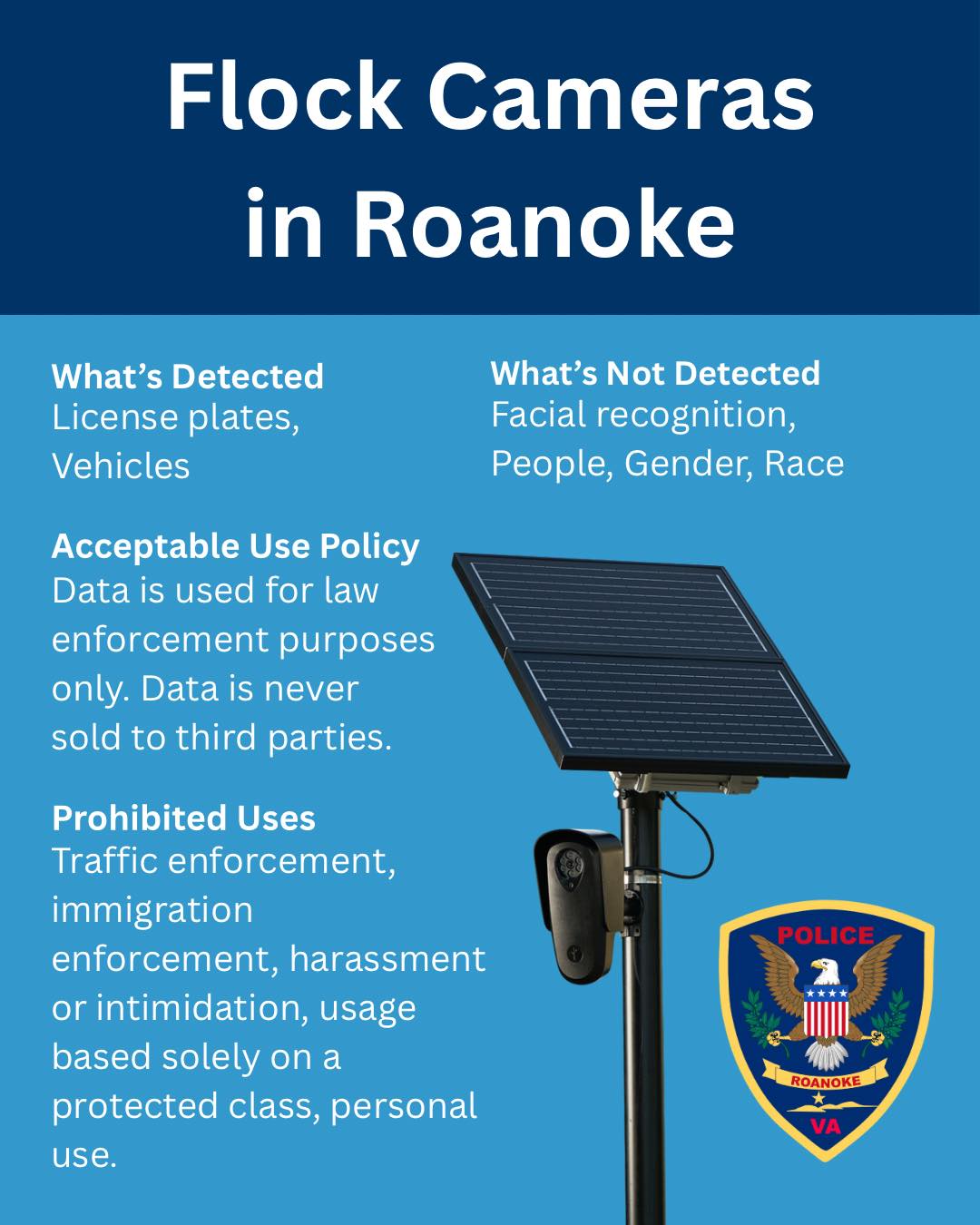
Roanoke is significantly expanding its police surveillance network, adding 75 Raven audio sensors to an existing system of 24 Flock Safety license plate readers that police have used for nearly two years. The move follows a 5-2 City Council vote Monday to deploy technology designed to detect gunshots and other triggered audio events in real time.
How the ‘eyes and ears’ connect
While both systems are provided by Flock Safety, they perform different roles. The existing 24 cameras capture visual data, such as license plate numbers and vehicle descriptions. The new Raven sensors are acoustic devices that remain in a “sleep” mode until they detect a specific sound, such as a gunshot, a car crash, or illegal fireworks.
When a sensor is triggered, it automatically alerts nearby cameras to capture images of vehicles fleeing the scene. This data is sent to the department’s Real-time Operations and Crime Center, known as Roc3. Public Information Officer Hannah Glasgow said the center allows analysts to relay information to officers faster than if they ran the data from their patrol cars. The new network is expected to cover a 1.75-mile radius of the city, WSLS 10 reported.
The debate over voice detection
The expansion has faced scrutiny from residents concerned about private conversations being recorded. Deputy Police Chief Adam Puckett told the council the system is designed to ignore human voices.
However, product documentation from Flock Safety indicates the Raven sensors can detect “sounds of human distress,” including screaming or shouting. Police officials maintain the system is policy-governed and only captures brief audio clips after a loud event triggers an alert.
Court rules Flock data is public record
The expansion comes after a landmark legal ruling involving the city’s surveillance data. In April 2025, a Roanoke City Circuit Court judge ruled that Flock data is a public record subject to the Freedom of Information Act, Cardinal News reported.
The ruling followed a lawsuit by Cardinal News Executive Editor Jeff Schwaner after the city denied his request for footage of his own vehicle. Judge Leisa Ciaffone rejected the city’s argument that the data was “investigative” and exempt from release. The court ruled that citizens have a right to access surveillance data involving their own vehicles and that running a report does not constitute creating a “new record.”
Lessons from Martinsville
Some residents urged the council to reject the plan, citing a pilot program in nearby Martinsville. That city dismantled its Raven system in late 2025 after officials said the technology missed some shootings and undercounted gunfire in other incidents.
Roanoke officials said the Martinsville issues often involved indoor gunshots, whereas the Raven system is built for outdoor detection. The Roanoke project is funded by a $57,040 federal grant, covering the equipment and installation for two years. Vice Mayor Terry McGuire and Councilmember Nicolas Hagen cast the two dissenting votes against the permit.
The post Roanoke pairs ‘eyes and ears’ in major police surveillance expansion first appeared on News/Talk 960-AM & FM-107.3 WFIR.
